
Cultybraggan Camp Museum
HeritageCultybraggan Camp: Scotland's Last Prisoner of War Camp and the Community That Saved It
The wind comes off the Perthshire hills with a bite that hasn't changed in eighty-five years. It rattles the curved corrugated walls of Nissen huts still standing in rows, still holding their ground against the Scottish weather, just as they did when the first prisoners arrived. Cultybraggan Camp sits in the shadow of the Grampian foothills near the village of Comrie, and to walk its gravel paths today is to step through layers of history so vivid you can almost hear the voices — German, Italian, Scots — echoing between the arched rooflines.
This is Camp 21. Scotland's last remaining prisoner of war camp. And one of the most remarkable community heritage projects in Britain.


Built by Refugees, Filled with Enemies
Cultybraggan was constructed between May and October 1941, but the story of who built it carries its own dark irony. The labourers were members of 249 Company Pioneer Corps — Jewish refugees who had fled Germany and Austria, now constructing a camp that would hold committed followers of the regime that had driven them from their homes. They laid foundations, erected Nissen huts, and strung barbed wire across ninety acres of Perthshire farmland, building a facility with a maximum capacity of 4,500 prisoners.
The camp first received Italian prisoners of war following Italy's surrender in 1943. But its true purpose — the one that would define its reputation — came when it was designated a "black camp" for Category C German prisoners: those classified by British intelligence as the most fanatically devoted to the Nazi cause. Waffen-SS, Fallschirmjäger paratroopers, U-boat crews, and ringleaders from the failed 1944 Devizes escape plot were all sent here, to the edge of the Scottish Highlands, where the surrounding terrain itself served as an additional barrier to escape.
The Murder in Hut 4
The darkest chapter at Cultybraggan unfolded on 22 December 1944. Feldwebel Wolfgang Rosterg had made no secret of his opposition to the Nazi cause — a dangerous position inside a compound full of hardline true believers. Falsely accused of having informed British authorities about an escape plot at Devizes camp, Rosterg was dragged before a kangaroo court in Hut 4 of Compound B, beaten, and strangled to death by his fellow prisoners.
Six men were convicted of the killing. Five were hanged at Pentonville Prison in London — the largest mass execution in Britain since the perpetrators of the Phoenix Park murders in the nineteenth century, and the last mass execution the country would ever carry out. It remains one of the most chilling episodes of wartime captivity on British soil, a reminder that the violence of ideology did not stop at the wire.


From Cold War Bunker to Community Heartbeat
The prisoners left in May 1947, but the camp never fell silent. By 1948 it had been repurposed as a Territorial Army training ground. During the Cold War it took on an even more secretive role: in 1960 the Royal Observer Corps built a nuclear monitoring post on site, and in the late 1980s the government selected Cultybraggan as the location for a Regional Government Headquarters — an underground bunker completed in 1990 at a cost of £30 million, designed to serve as the Scottish Office's command centre in the event of nuclear war.
When the military finally departed in 2004, approximately eighty original Nissen huts still stood — an extraordinary survival rate. Other prisoner of war camps across Scotland had long since been demolished, leaving nothing but concrete footprints. Cultybraggan's physical completeness, with its punishment block cell doors still intact and the curved huts still lined in their original rows, made it irreplaceable. Historic Scotland recognised it as one of the three best-preserved purpose-built Second World War prisoner of war camps in all of Britain.


A Village Takes Ownership
The story could have ended there — another derelict military site slowly surrendering to weather and neglect. Instead, in March 2005, forty residents of Comrie attended a presentation by the Westray Development Trust and decided that if a small Orkney island community could take charge of its own future, so could they. The Comrie Development Group was formed, later becoming the Comrie Development Trust, officially launching in July 2006 with membership that quickly swelled past seven hundred.
The community ballot, held under the Land Reform (Scotland) Act 2003, achieved a 72% turnout with 97% voting in favour of purchasing the camp — the most decisive community ballot result recorded under that legislation at the time. On 6 July 2007, the Trust signed the legal paperwork to buy the ninety-acre site from the Ministry of Defence for £350,000. The keys were handed over on 20 September 2007.
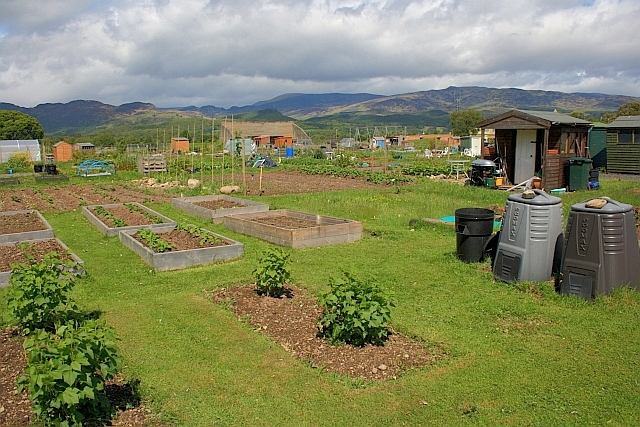
What followed has been a masterclass in community-led preservation. Nissen huts have been converted into small business spaces, self-catering holiday accommodation, and a bunkhouse. A community orchard was planted in 2010. A community woodland flourishes on the grounds. And in 2022, the former guard house was opened as a museum, telling the camp's story through storyboards detailing daily life, the complex relationships between prisoners and the villagers of Comrie, and the objects left behind.

Kindness Remembered Across Decades
Perhaps the most unexpected testament to Cultybraggan's layered humanity came in 2014, when Heinrich Steinmeyer — a former Waffen-SS member who had been held at the camp — died and left a bequest of £384,000 to the village of Comrie. His reason: the "kindness and generosity" shown to him during his captivity. It is an astonishing footnote — a man classified as a committed Nazi supporter, remembering a small Scottish village with gratitude seven decades later. The camp held enemies, but the village, it seems, made something more complicated of them.
Why Cultybraggan Matters
Today, with over 800 members, the Comrie Development Trust stewards a site that is simultaneously a scheduled monument, a living community hub, a museum, a holiday destination, and a place of remembrance. The punishment cells still carry the weight of their purpose. The Nissen huts still curve against the Highland sky. The camp's survival is not an accident — it is the result of a village deciding, collectively, that some stories are too important to let crumble.
Cultybraggan Camp is open to visitors, with the museum located in the original guard block, a café on site, and accommodation available in converted huts. It stands as proof that heritage preservation does not require grand institutions — sometimes it requires a community ballot, a collective act of will, and the stubborn belief that the past deserves a future.
This article was partly inspired by old photographs and personal recordings that came to light when someone brought their family memories to be digitised. It made us wonder what else is out there — in attics, shoeboxes, old cupboards — connected to Cultybraggan Camp. If anyone holds old media connected to this remarkable place, services like EachMoment can help preserve them for future generations.